
Bad Audio is a Self-Respect Problem
- Freddy Cruz
- Jan 23
- 5 min read

Listen...
I've avoided this topic like the plague. Because it feels obvious. It feels like something I shouldn't have to say out loud.
But apparently, I do.
So here it is: Bad audio isn't a technical problem. It's a self-respect problem.
And if that stings a little? Good. Sit with it.
Because every time you hit publish on an episode that sounds like you recorded it inside a washing machine, you're telling your audience exactly what you think of them. And yourself.
The Preacher Shouting Through a Pillow
Picture this.
You walk into a church. The preacher steps up to the pulpit. He's got fire in his eyes, conviction in his soul, and a message that could genuinely change your life.
Then he pulls out a pillow, smashes it against his face, and starts screaming his sermon into the stuffing.

You'd leave, right? Of course you would. Because no matter how powerful the message, the delivery made it impossible to receive.
That's what bad audio does to your podcast.
You could have the most brilliant insights in your industry. You could be dropping wisdom that would make your competitors weep. But if your listeners have to strain through echo, hiss, muffled vocals, and that weird buzzing sound you've been "meaning to fix"...
They're gone.
Not because they don't care about your message. But because you clearly don't care enough to deliver it properly.
Right? Wrong.
Actually... right. That's exactly what's happening.
It's Not About the Gear. It's About the Standard.
Here's where people get defensive.
"But Freddy, I can't afford a fancy studio setup."
"But Freddy, I'm just starting out."
"But Freddy, my podcast is about the content, not the production."
Bingo. There it is. The lie we tell ourselves.
Let me blow this excuse out of the water right now.
A $100 Audio-Technica ATR2100X can sound nearly identical to a $400 Shure SM7B in the right hands. I'm not exaggerating. Side by side, most listeners can't tell the difference if you know what you're doing.
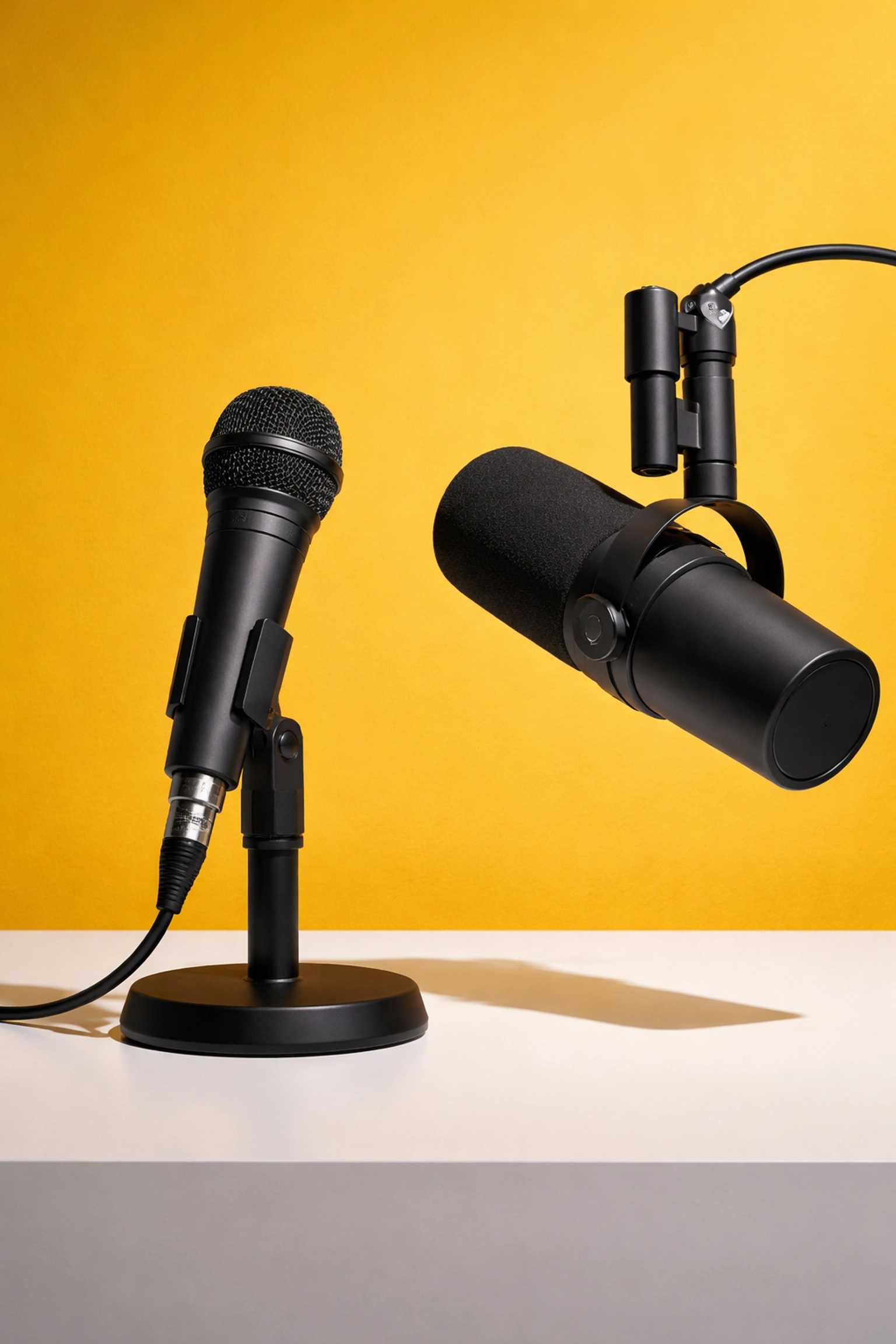
The SM7B is legendary. It's beautiful. It's what Joe Rogan uses. But it's not magic.
You know what is magic? Giving a damn.
Recording in a room that doesn't sound like a racquetball court.
Getting close to the mic instead of sitting three feet away like it's contagious.
Running a basic noise gate so we don't hear your neighbor's leaf blower.
Actually listening to your episode before you publish it.
This isn't rocket science. This is eating your peas. It's the boring, unglamorous work that separates the professionals from the amateurs.
And here's the hard truth: Your audience can hear the difference between someone who cares and someone who's just going through the motions.
What Bad Audio Really Says About Your Brand
Let's talk podcast strategy for a second.
Your podcast is a brand asset. It's not a hobby. It's not a "nice to have." If you're a business owner, founder, or thought leader, your podcast is often the first extended interaction someone has with you.
Think about that.
Before they buy from you. Before they hire you. Before they invest in you. They're spending 30, 45, maybe 60 minutes listening to your voice in their earbuds.
Now... what does it say about your business if that audio sounds like it was recorded on a flip phone in 2004?
It says: "I cut corners."
It says: "I don't sweat the details."
It says: "Good enough is good enough for me."
Is that the message you want your brand sending?
Listen... I'm not trying to be harsh for the sake of being harsh. But someone needs to say this, because too many podcasters are sabotaging their own credibility before they even get to the good stuff.
Your podcast production quality is a direct reflection of your professional standards. Period.
The George Washington Move
Here's a quick history lesson, because you know I can't resist.
During the Revolutionary War, George Washington's troops captured a dog that belonged to a British general. Washington could have kept it. Could have used it as a taunt. Could have ignored it entirely.
Instead? He returned it. Under a flag of truce. With a polite note.

Why? Because Washington understood that how you do things matters just as much as what you do. Your character shows up in the small moments. The moments when no one would blame you for cutting a corner.
Your podcast audio is one of those moments.
No one's going to publicly call you out for mediocre sound quality. Your mom will still say the episode was "great, honey." Your friends will keep being supportive.
But your audience? The people you actually want to reach, convert, and serve?
They notice. They always notice.
And they make quiet decisions based on what they hear.
The Fix Is Simpler Than You Think
I'm not asking you to rent a studio. I'm not asking you to drop five grand on equipment.
I'm asking you to raise your standard.
Here's your checklist:
Get a decent dynamic microphone. The ATR2100X, the Samson Q2U, or yes, the SM7B if you've got the budget. Any of these will work beautifully.
Treat your space. Hang some blankets. Record in a closet full of clothes. Get a portable vocal shield. Kill the echo.
Learn basic editing. Noise reduction, compression, EQ. You don't need to be a sound engineer. You just need to not sound like garbage.
Listen before you publish. Actually put on headphones and listen to your episode like a first-time listener would. If you wouldn't want to sit through it, why would they?
Batch your improvements. You don't have to fix everything today. But fix one thing this week. Then another next week. Momentum beats perfection.
This is grown-up podcasting. This is being in the arena with blood on your face, doing the work that actually matters instead of chasing vanity metrics and download counts.
Your Podcast Deserves a Strategy. So Do You.
Look, if you've read this far, you're not the type to settle. You're not here for "good enough."
You want a podcast that actually moves the needle for your business. One that sounds professional, feels intentional, and converts listeners into clients.
That's exactly why I built PodQuest: Cracking the Code to Creating a Bingeworthy Show.
It's not a course full of fluff. It's a strategic blueprint for building a podcast that serves your brand, respects your audience, and doesn't make you cringe when you hit play.
Because you deserve better than pillow-muffled mediocrity.
And so do the people waiting to hear what you have to say.
Always keep your mic hot.
Freddy
Comments